Psychological therapies for multiple sclerosis: Moving towards best practices
Overview
This talk presents findings from a large network meta-analysis of randomized controlled trials, highlighting which psychological therapies are most effective, which components drive improved outcomes for people with multiple sclerosis, and gaps in current research. The session will also explore equity, diversity, and accessibility issues in MS research and care, and discuss practical recommendations for improving access to psychological support.
Speakers
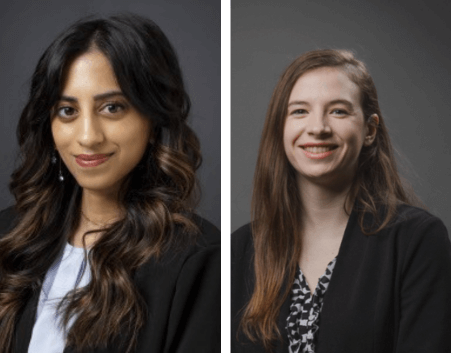
Ashvene Sureshkumar is a PhD candidate at the University of Toronto in the Rehabilitation Sciences Institute and a Research Associate at Inclusive Design for Employment Access. She is supervised by Dr. Robert Simpson, Dr. Mark Bayley, Dr. Sarah Munce, and Dr. Monika Kastner. She holds a Bachelor of Health Science and a Master of Science in Health and Rehabilitation Sciences from Western University. Her research focuses on equity, diversity, inclusion, and accessibility, mixed methods, mindfulness based interventions, health services research, and people living with multiple sclerosis. Her PhD work involves developing an implementation toolkit to support the delivery of online mindfulness based interventions for people living with multiple sclerosis.
Jillian Scandiffio is a PhD candidate in Rehabilitation Sciences at the University of Toronto under the supervision of Dr. Sarah Munce and Dr. Robert Simpson. She holds a Master of Science in Kinesiology and Health Studies from Queen’s University and a Bachelor of Science in Kinesiology from McMaster University. Her doctoral research focuses on informing the development of a toolkit to support healthcare providers in prescribing physical activity for people living with multiple sclerosis. Her research interests include the promotion and implementation of health behaviour initiatives to improve wellbeing in people living with multiple sclerosis.
Host
Ansha Nega Ahmed is a Postdoctoral Researcher at Queen’s University, working under the supervision of Dr. Dan Samosh and supporting Inclusive Design for Employment Access Incubator Hub on Transitions to Work and Career Development. Her research focuses on disability inclusive mentorship to support the transition to work and career advancement of persons with disabilities. Ansha is a passionate researcher, educator, and systems thinker with a background in occupational health and rehabilitation science, and extensive experience in disability inclusive development initiatives. Her research interests are at the intersection of work and health, including long term work trajectories, return to work experiences, and health outcomes of injured workers. She is particularly interested in promoting a holistic and connected approach across healthcare and employment systems to better support injured workers and improve health and employment outcomes.
About the IDEA Early Career Researcher Talks
The IDEA Early Career Researcher Talks serve as a dynamic forum for students, post-doctoral scholars, and early career researchers to exchange knowledge, build community, and showcase their emerging research in the field of workplace disability inclusion. The monthly talks bring together members of research and practice communities, including students, researchers, persons with lived experience, policymakers, subject-matter experts, and employers. The series’ primary purpose is to provide a supportive space for early-career scholars to share their work—at whatever stage—and develop their research program.